Boething Treeland Farms cultiva más de 1.000 variedades de árboles, arbustos, plantas perennes y plantas especiales plantas nueve viveros de California para abastecer a los sectores mayoristas de jardinería y viveros en todo el oeste de los Estados Unidos y más allá.
Tipo de planta: Arbustos
Perenne-Caducifolio: Perenne
Tamaño maduro general: Mediano
También cultivado como: Arbusto
Altura y envergadura en edad adulta: 3-6' x 2-5'
Natural Growth Habit: Clumping, Dense, Shrubby, Spreading, Upright
Native To: Pacific Northwest
Exposición: Pleno sol, Sombra parcial, Sombra total
Riego: Riego medio, riego bajo
Color de la flor: Amarillo
Época de floración: Primavera
Special Features: Attracts Birds/Butterflies/Bees / Cold Hardy / Deer Resistant / Desert Conditions / Drought Resistant / Edible / Erosion Control / Fall Color / Fire Resistant/Retardant / Fragrant / Hedge / Intermountain Conditions / Screen / Seacoast Conditions / Shade Tolerant
Tamaños de envase: n. º1, n.º3, n.º5
Zonas de jardinería de Sunset: 2-12, 14-24
Zona de rusticidad del USDA: 5-9

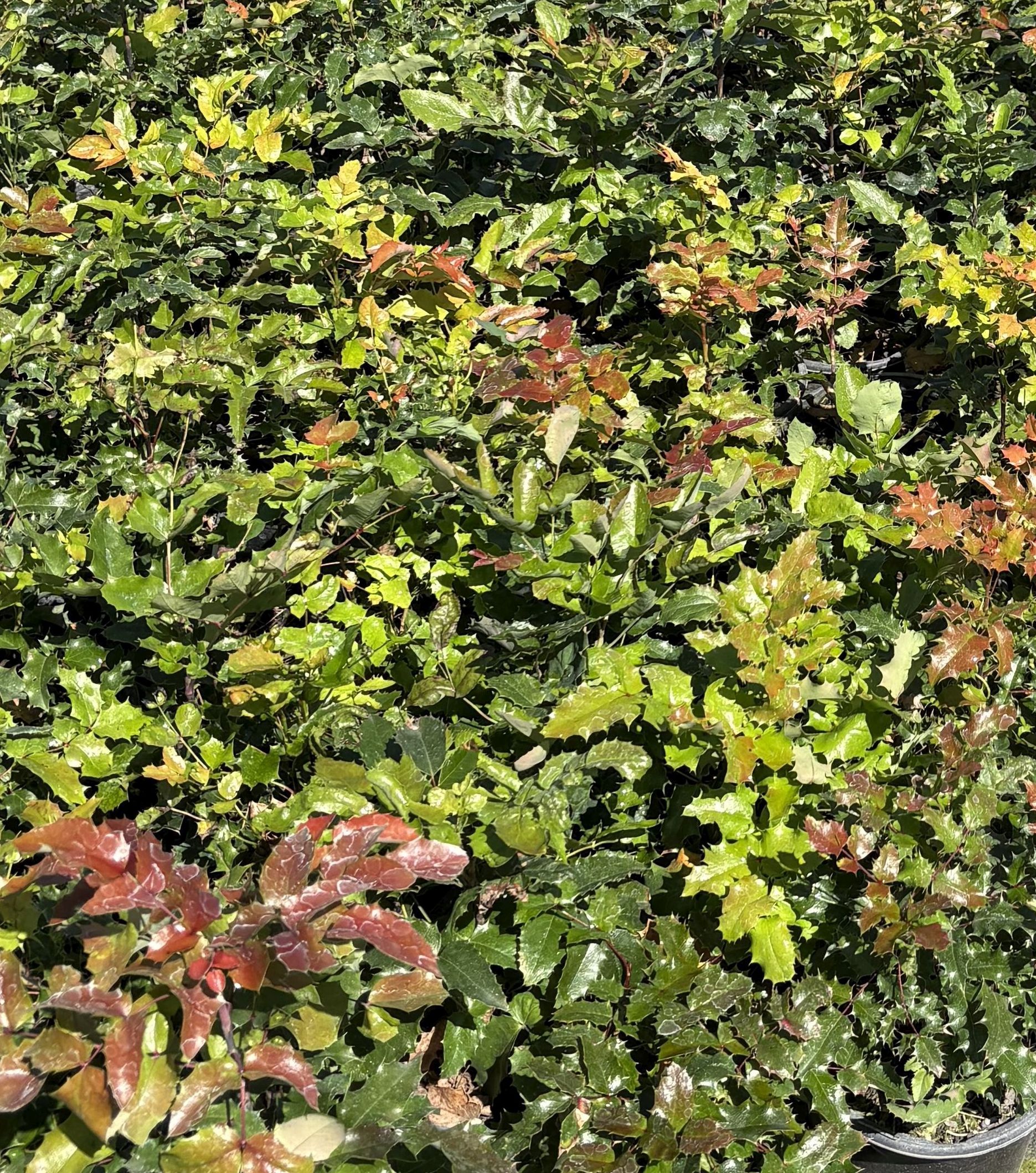
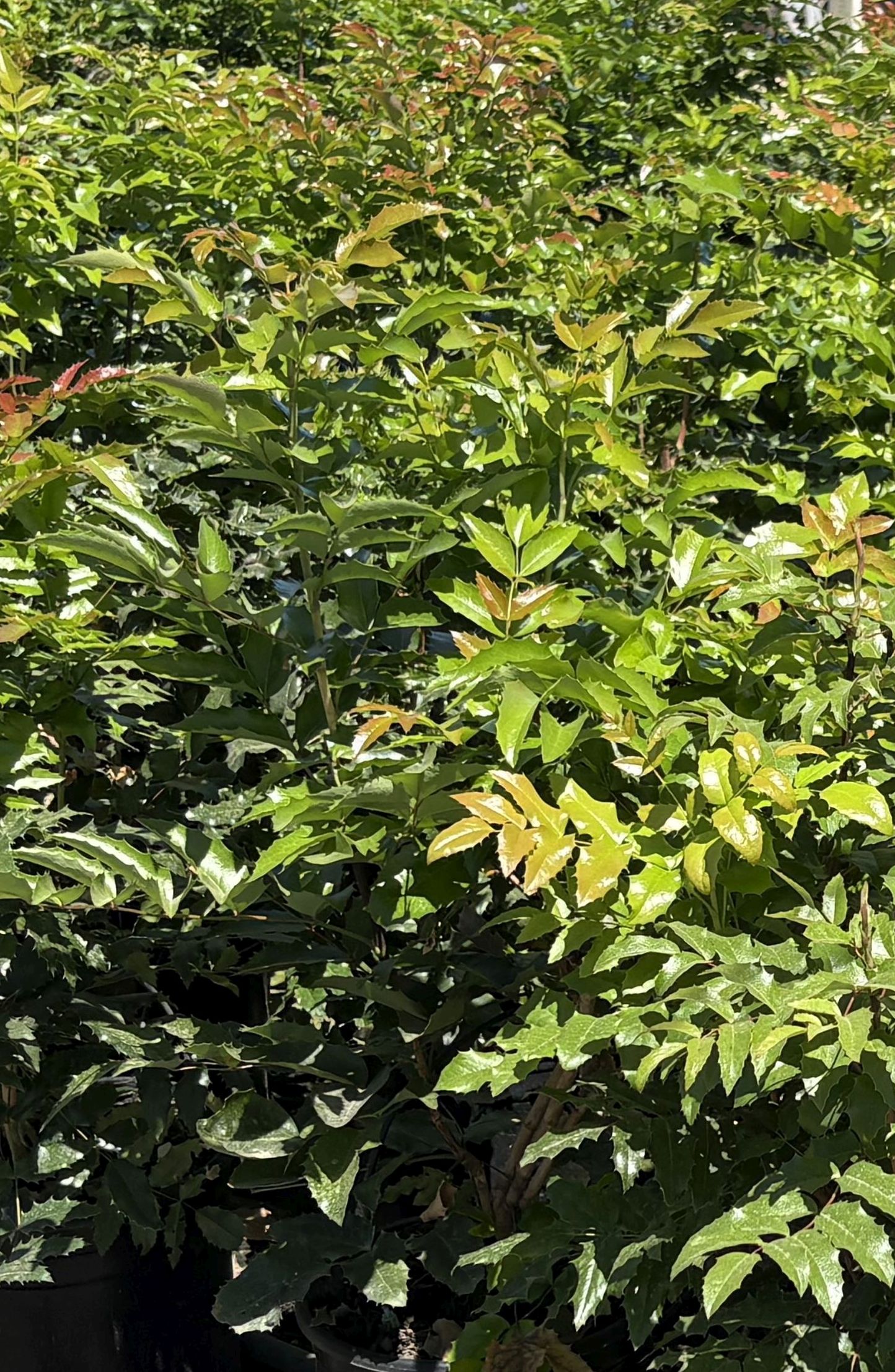
Mahonia aquifolium is a broadleaf, evergreen shrub with a stiffly-upright, multi-stemmed, and suckering habit and featuring pinnately compound leathery, spine-toothed, holly-like leaves. New growth emerges bronze-red in spring, turning deep green by summer, and finally shifting to deep burgundy, bronze, or purple-wine in the winter. In spring it produces racemes of fragrant, bright golden-yellow flowers that become fleshy, glaucous, edible, blue-black berries resembling small clusters of grapes that ripen by mid-to-late summer. Leaves are dimorphic; young leave are generally less spiny and flatter than older, spiny, wavy leaves. It spreads slowly via underground rhizomes and can be quite dense and shrubby. Uses include barriers, hedges, screens, erosion control. Excellent in intermountain conditions. Moderately tolerant in desert and seacoast landscapes with the right support. Very tough in urban landscapes. Moderate water use when installed and acclimating; drought resistant once established. Highly adaptable to chalk, clay, loam, or sand. It prefers moist, organically rich, acidic soils but can tolerate mildly alkaline conditions. Very shade tolerant, though it can grow in full sun if the soil stays adequately moist. Deer and rabbit-resistant. Fire-resistant. Cold hardy to -15°F.
Mahonia aquifolium is a broadleaf, evergreen shrub with a stiffly-upright, multi-stemmed, and suckering habit and featuring pinnately compound leathery, spine-toothed, holly-like leaves. New growth emerges bronze-red in spring, turning deep green by summer, and finally shifting to deep burgundy, bronze, or purple-wine in the winter. In spring it produces racemes of fragrant, bright golden-yellow flowers that become fleshy, glaucous, edible, blue-black berries resembling small clusters of grapes that ripen by mid-to-late summer. Leaves are dimorphic; young leave are generally less spiny and flatter than older, spiny, wavy leaves. It spreads slowly via underground rhizomes and can be quite dense and shrubby. Uses include barriers, hedges, screens, erosion control. Excellent in intermountain conditions. Moderately tolerant in desert and seacoast landscapes with the right support. Very tough in urban landscapes. Moderate water use when installed and acclimating; drought resistant once established. Highly adaptable to chalk, clay, loam, or sand. It prefers moist, organically rich, acidic soils but can tolerate mildly alkaline conditions. Very shade tolerant, though it can grow in full sun if the soil stays adequately moist. Deer and rabbit-resistant. Fire-resistant. Cold hardy to -15°F.