

Boething Treeland Farms grows over 1,000 varieties of trees, shrubs, perennials and specialty plants on 9 California nurseries to serve the wholesale landscape and nursery industries throughout the Western United States and beyond.
Plant Type: Vines
Evergreen-Deciduous: Evergreen
Overall Mature Size: Large
Also Grown As: Staked
Mature Height & Spread: 20-30'
Natural Growth Habit: Vining
Native To: Mexico
Exposure: Full Sun, Partial Shade
Water: Medium Water, Low Water
Flower Color: Red
Bloom Time: Spring, Summer, Fall
Special Features: Attracts Birds/Butterflies/Bees / Drought Resistant / Fragrant / Screen / Seacoast Conditions / Shade Tolerant
Container Sizes: #1, #5, #15
Sunset Garden Zones: 8, 9, 14-24
USDA Hardiness Zone: 9-11

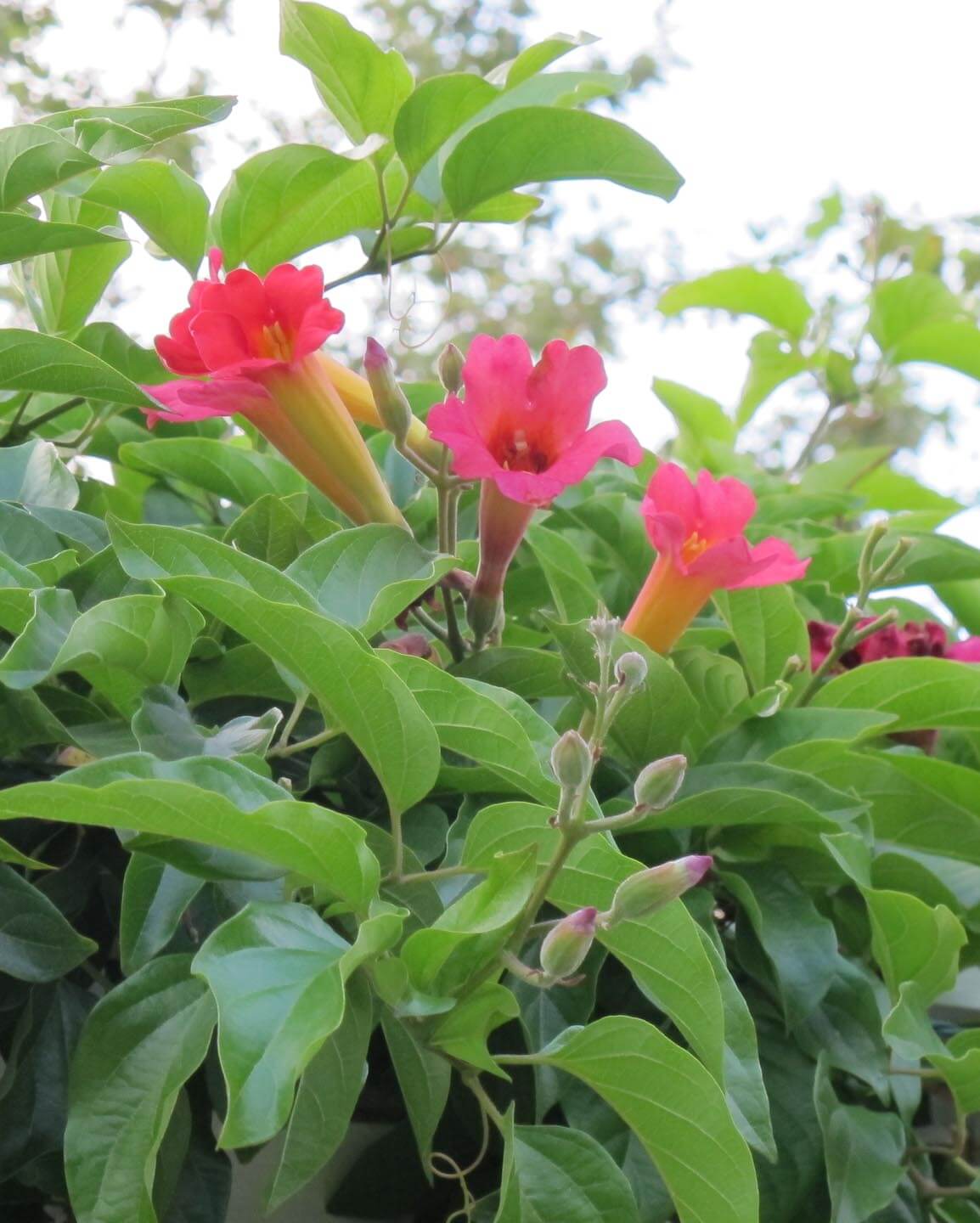
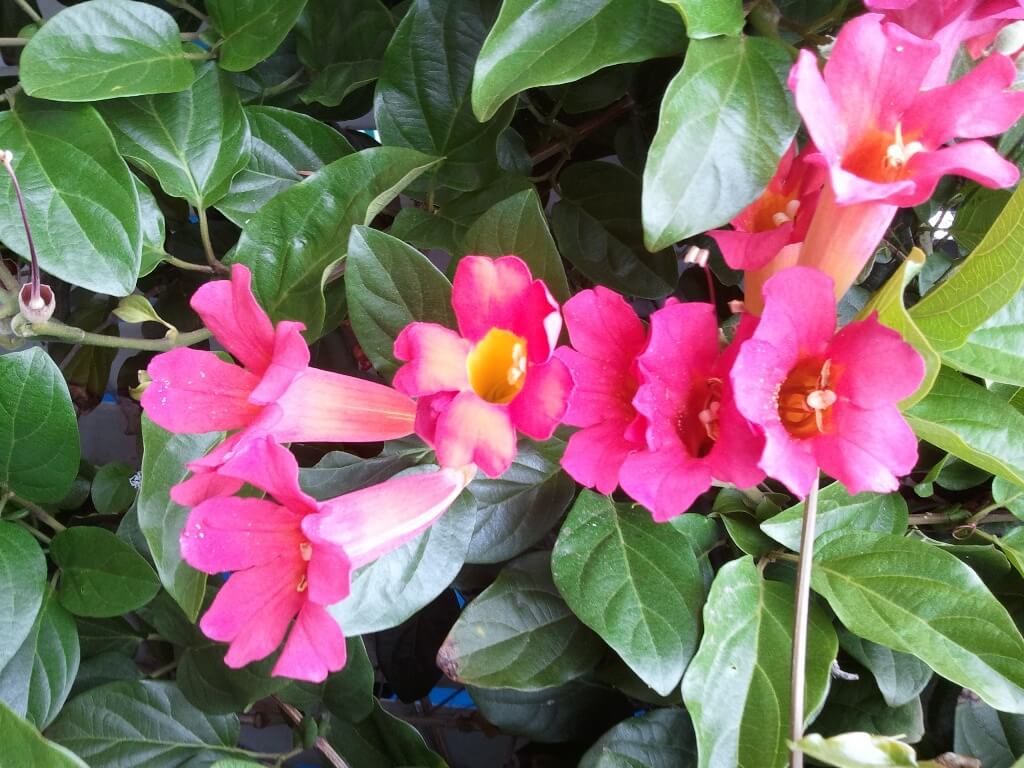
Distictis buccinatoria is a fast-growing, evergreen woody vine that features large red-orange flowers with yellow throats, blooming spring to fall. It is ideal for privacy screens, hedges, and covering large walls, fences, or arbors. Thrives in hot, sunny conditions but tolerates partial shade. It requires regular water to establish but becomes drought-tolerant once mature. Can grow in a variety of soils, including sandy, loamy, and even clay, provided they do not remain waterlogged; needs excellent drainage. Cold hardy to 25°F. We still use the older name that is in widespread use, Distictis.
Distictis buccinatoria is a fast-growing, evergreen woody vine that features large red-orange flowers with yellow throats, blooming spring to fall. It is ideal for privacy screens, hedges, and covering large walls, fences, or arbors. Thrives in hot, sunny conditions but tolerates partial shade. It requires regular water to establish but becomes drought-tolerant once mature. Can grow in a variety of soils, including sandy, loamy, and even clay, provided they do not remain waterlogged; needs excellent drainage. Cold hardy to 25°F. We still use the older name that is in widespread use, Distictis.