

Boething Treeland Farms grows over 1,000 varieties of trees, shrubs, perennials and specialty plants on 9 California nurseries to serve the wholesale landscape and nursery industries throughout the Western United States and beyond.
Plant Type: Perennials
Evergreen-Deciduous: Evergreen
Overall Mature Size: Small
Also Grown As: Bush
Mature Height & Spread: 1-2' x 2-4'
Natural Growth Habit: Clumping, Upright
Native To: California, Pacific Northwest, USA
Exposure: Full Sun, Partial Shade
Water: Medium Water, Low Water
Flower Color: Purple
Bloom Time: Spring
Special Features: Attracts Birds/Butterflies/Bees / Cold Hardy / Deer Resistant / Drought Resistant / Erosion Control / Fire Resistant/Retardant / Seacoast Conditions / Shade Tolerant / Verticillium Wilt Resistant
Container Sizes: #1
Sunset Garden Zones: 4-9, 14-24
USDA Hardiness Zone: 7-9

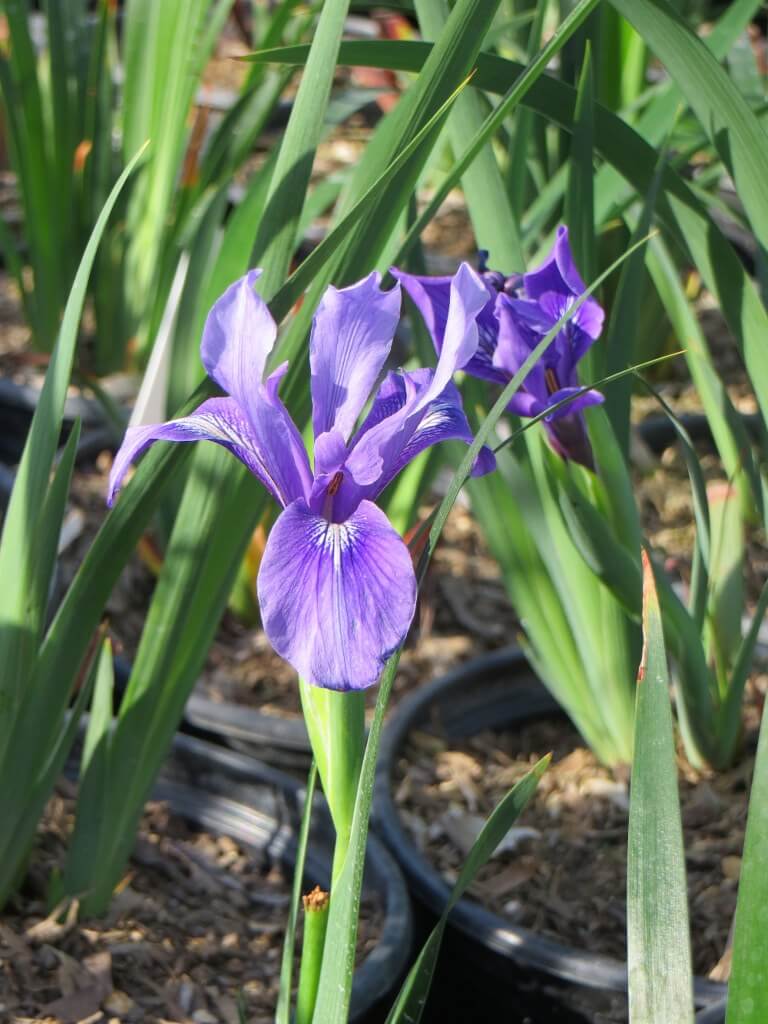
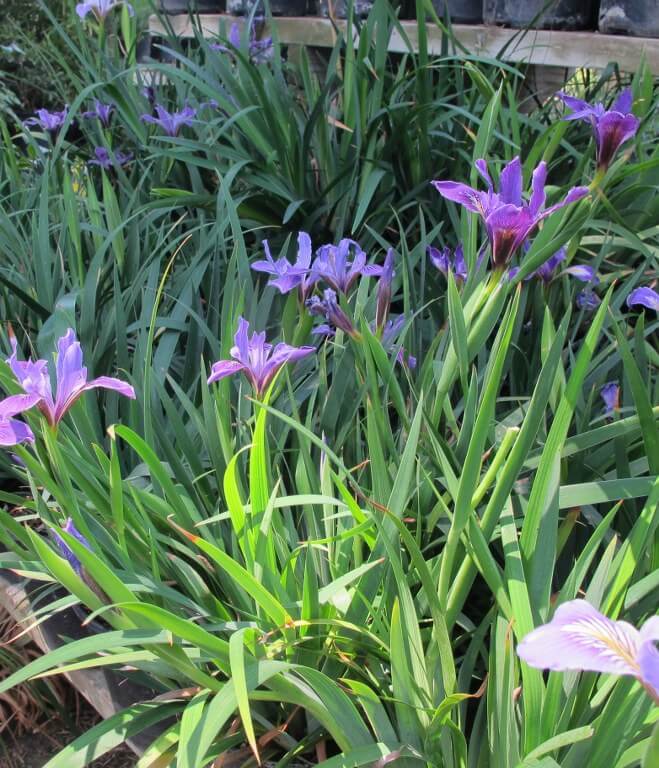
Iris douglasiana is an evergreen perennial with an upright, clumping habit and featuring glossy, dark green, sword-shaped leaves and flowers that usually are violet-purple, but can also emerge lavender, blue, pale cream, yellow, or white. Uses include dry shade plantings under oaks, groundcover, borders, erosion control. Excellent for coastal landscapes. Prefers light or part shade inland, can take more sun right on the coast. It is best in well-drained, acidic to neutral soils rich in organic matter, but adapts to clay. Low to medium water use. Drought-tolerant near the coast; appreciates regular or occasional summer water in hot inland landscapes. Deer-resistant. Resistant to Verticillium wilt. Fire-resistant. Cold hardy to 10°F.
Iris douglasiana is an evergreen perennial with an upright, clumping habit and featuring glossy, dark green, sword-shaped leaves and flowers that usually are violet-purple, but can also emerge lavender, blue, pale cream, yellow, or white. Uses include dry shade plantings under oaks, groundcover, borders, erosion control. Excellent for coastal landscapes. Prefers light or part shade inland, can take more sun right on the coast. It is best in well-drained, acidic to neutral soils rich in organic matter, but adapts to clay. Low to medium water use. Drought-tolerant near the coast; appreciates regular or occasional summer water in hot inland landscapes. Deer-resistant. Resistant to Verticillium wilt. Fire-resistant. Cold hardy to 10°F.