Boething Treeland Farms grows over 1,000 varieties of trees, shrubs, perennials and specialty plants on 9 California nurseries to serve the wholesale landscape and nursery industries throughout the Western United States and beyond.
Plant Type: Trees
Evergreen-Deciduous: Deciduous
Overall Mature Size: Large
Also Grown As: Standard Tree
Mature Height & Spread: 70-90' x 30-50'
Natural Growth Habit: Broad, Oval, Upright
Native To: Eastern USA
Exposure: Full Sun, Partial Shade
Water: Medium Water
Flower Color: Yellow
Bloom Time: Spring
Special Features: Attracts Birds/Butterflies/Bees / Cold Hardy / Deer Resistant / Fall Color / Intermountain Conditions
Container Sizes: #15, #25
Sunset Garden Zones: 2-12, 14-24
USDA Hardiness Zone: 4-9

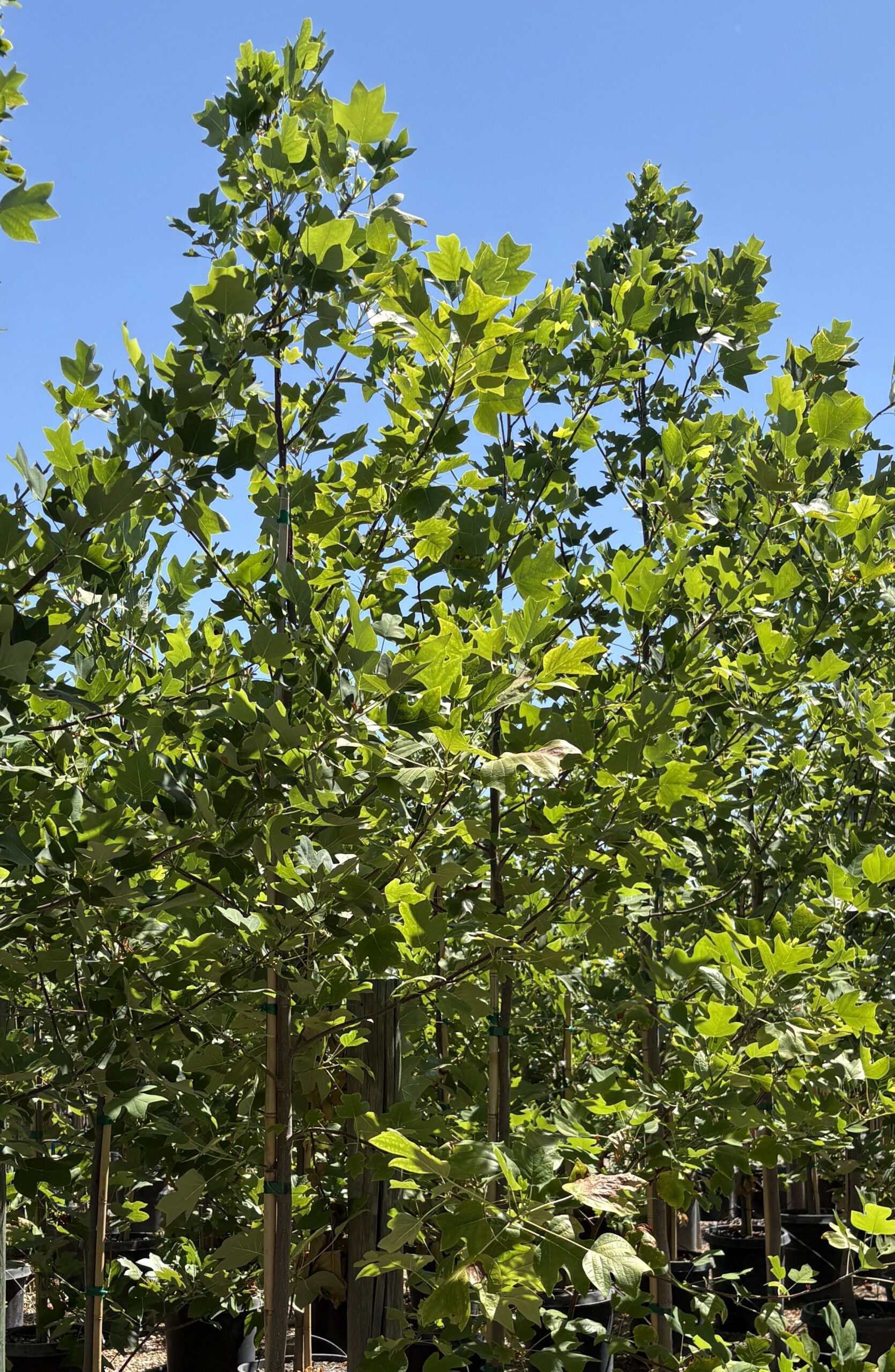
Liriodendron tulipifera is a deciduous, broadleaf tree with an upright, broad, oval habit and featuring glossy green leaves during spring and summer, shifting to bright gold/yellow in autumn and cup-shaped yellow-green flowers in late spring to early summer. Its leaves are dimorphic (juvenile leaves are different than mature leaves). It also is excurrent (single leader and pyramidal) when young and becomes decurrent (broad and rounded without a single, dominant leader) when mature. Uses include large shade tree, specimen, focal point. Best use is as a park or campus tree. Moderately tolerant of urban conditions. It has high water requirements; intolerant of drought. Prefers deep, rich, consistently moist, well-drained soil. Best in slightly acidic soils. Highly intolerant of deep shade; needs full sun to partial sun for best development. Deer and rabbit-resistant although deer may nibble on tips of young trees occasionally. Cold hardy to -30°F.
Liriodendron tulipifera is a deciduous, broadleaf tree with an upright, broad, oval habit and featuring glossy green leaves during spring and summer, shifting to bright gold/yellow in autumn and cup-shaped yellow-green flowers in late spring to early summer. Its leaves are dimorphic (juvenile leaves are different than mature leaves). It also is excurrent (single leader and pyramidal) when young and becomes decurrent (broad and rounded without a single, dominant leader) when mature. Uses include large shade tree, specimen, focal point. Best use is as a park or campus tree. Moderately tolerant of urban conditions. It has high water requirements; intolerant of drought. Prefers deep, rich, consistently moist, well-drained soil. Best in slightly acidic soils. Highly intolerant of deep shade; needs full sun to partial sun for best development. Deer and rabbit-resistant although deer may nibble on tips of young trees occasionally. Cold hardy to -30°F.