
Boething Treeland Farms grows over 1,000 varieties of trees, shrubs, perennials and specialty plants on 9 California nurseries to serve the wholesale landscape and nursery industries throughout the Western United States and beyond.
Plant Type: Shrubs
Evergreen-Deciduous: Evergreen
Overall Mature Size: Large
Also Grown As: Bush
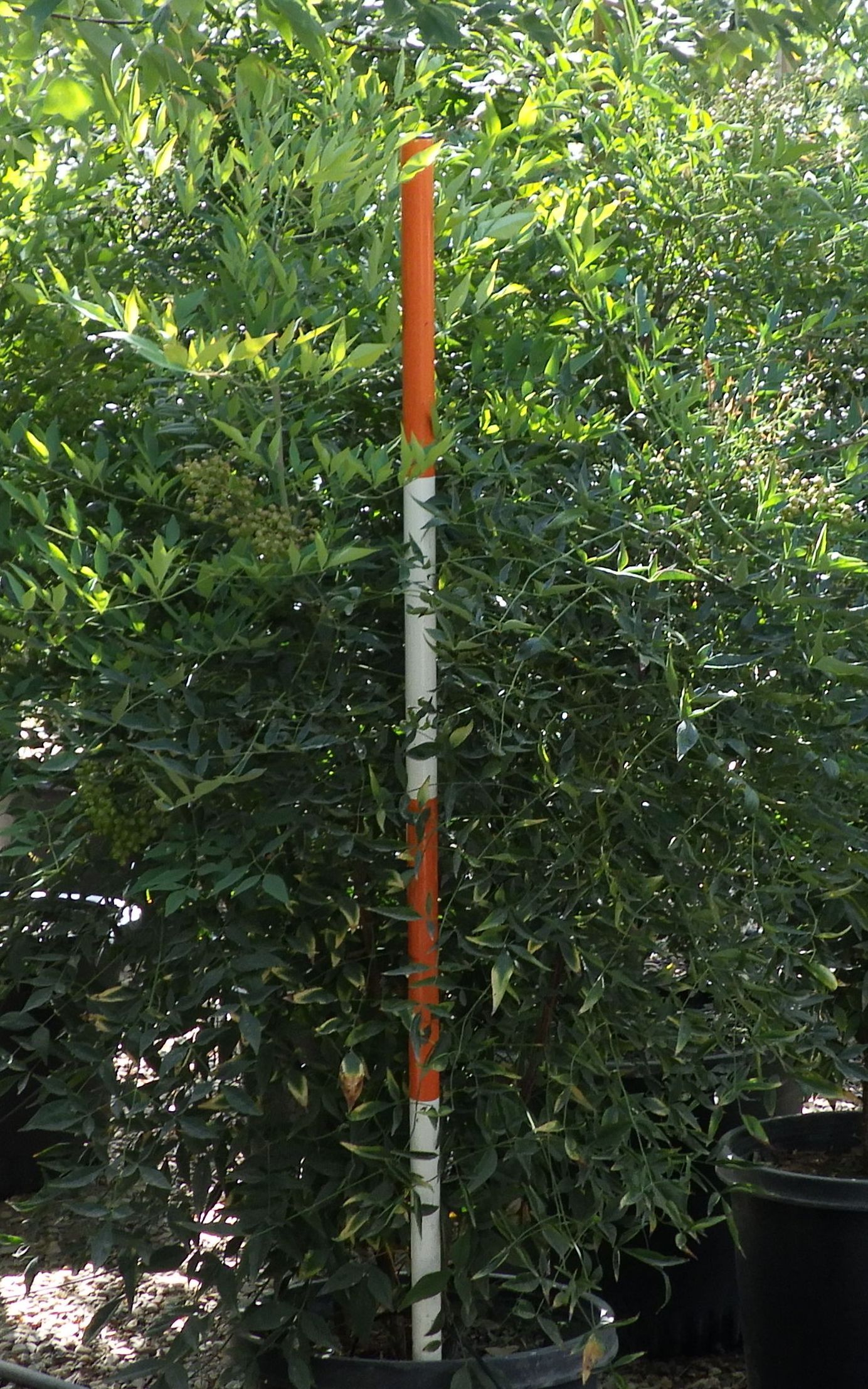
Mature Height & Spread: 4-8' x 2-5'
Natural Growth Habit: Clumping, Upright, Vase
Native To: Asia, Japan
Exposure: Full Sun, Partial Shade, Full Shade
Water: Medium Water, Low Water
Flower Color: White
Bloom Time: Spring, Summer
Special Features: Attracts Birds/Butterflies/Bees / Cold Hardy / Colorful Foliage / Deer Resistant / Desert Conditions / Drought Resistant / Erosion Control / Fall Color / Hedge / Intermountain Conditions / Screen / Seacoast Conditions / Shade Tolerant / Verticillium Wilt Resistant
Container Sizes: #1, #5, #15
Sunset Garden Zones: 4-24
USDA Hardiness Zone: 6-10

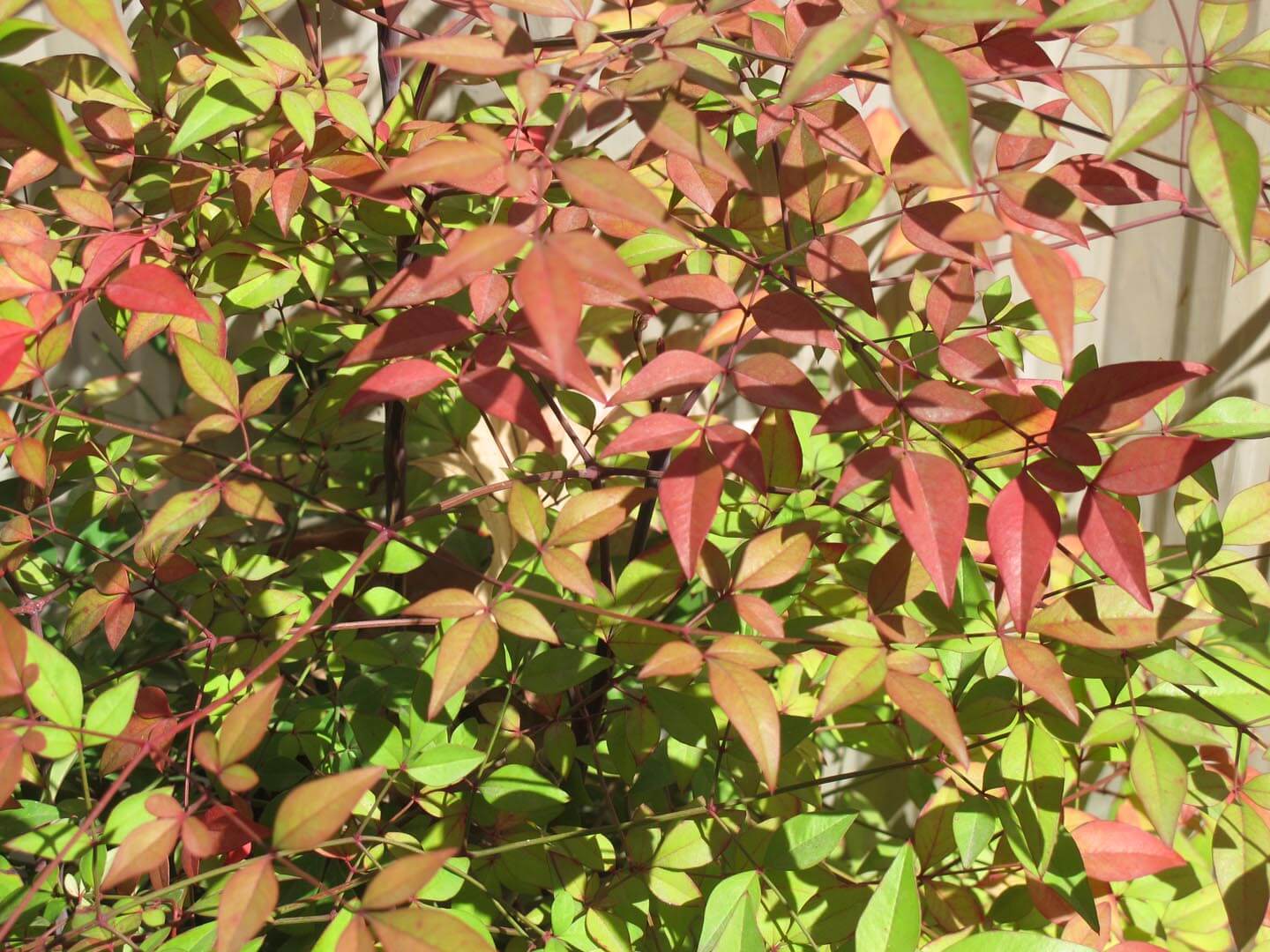
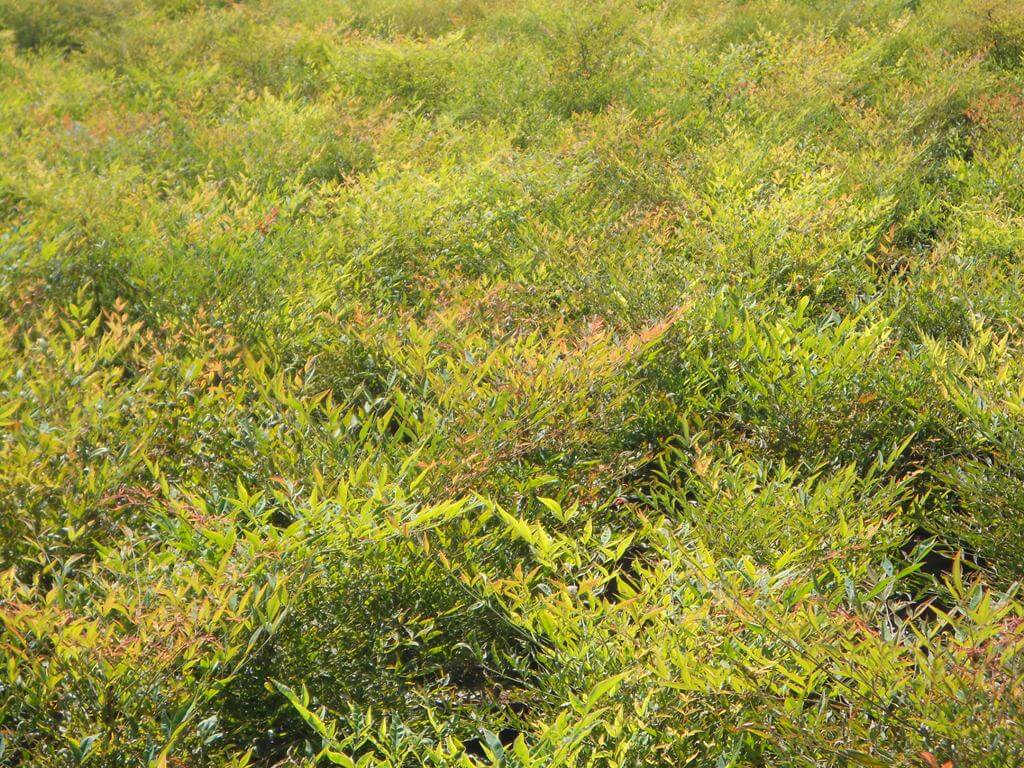
Nandina domestica is a broadleaf, evergreen shrub with an upright, vase-shaped habit that slowly spreads into clumps via rhizomes, featuring smooth, gray-brown to tan cane-like stems with subtle vertical striping and ring-like leaf scars resembling bamboo. Leaves emerge bronze, pink, or red in spring, turn green to blue-green in summer, and shift to bright red, orange, or purple in cold weather, while tiny pinkish-white to creamy white blossoms with prominent yellow anthers produce large, drooping terminal clusters of glossy, bright red berries that ripen in fall and persist through winter. High genetic diversity resulting in many cultivars supports uses in foundation plantings, informal hedges, screens, mass plantings, borders, containers, and erosion control. Cold hardy to 0°F, it thrives in full sun to heavy shade—where foliage color is brightest in full sun, while deep shade produces looser, greener growth—and requires low to moderate water use once established, tolerating dry spells well though occasional deep watering improves appearance. Very adaptable to clay, loam, and sand across acidic to slightly alkaline pH provided drainage is good (though high alkalinity can cause iron chlorosis), it is tolerant of urban conditions, has moderate tolerance of seacoast conditions though direct maritime salt spray causes marginal leaf scorch, moderate tolerance of intermountain conditions if sheltered from extreme conditions, and is tolerant of desert conditions provided it receives supplemental irrigation and protection from scorching afternoon reflection, while remaining deer and rabbit resistant.
Nandina domestica is a broadleaf, evergreen shrub with an upright, vase-shaped habit that slowly spreads into clumps via rhizomes, featuring smooth, gray-brown to tan cane-like stems with subtle vertical striping and ring-like leaf scars resembling bamboo. Leaves emerge bronze, pink, or red in spring, turn green to blue-green in summer, and shift to bright red, orange, or purple in cold weather, while tiny pinkish-white to creamy white blossoms with prominent yellow anthers produce large, drooping terminal clusters of glossy, bright red berries that ripen in fall and persist through winter. High genetic diversity resulting in many cultivars supports uses in foundation plantings, informal hedges, screens, mass plantings, borders, containers, and erosion control. Cold hardy to 0°F, it thrives in full sun to heavy shade—where foliage color is brightest in full sun, while deep shade produces looser, greener growth—and requires low to moderate water use once established, tolerating dry spells well though occasional deep watering improves appearance. Very adaptable to clay, loam, and sand across acidic to slightly alkaline pH provided drainage is good (though high alkalinity can cause iron chlorosis), it is tolerant of urban conditions, has moderate tolerance of seacoast conditions though direct maritime salt spray causes marginal leaf scorch, moderate tolerance of intermountain conditions if sheltered from extreme conditions, and is tolerant of desert conditions provided it receives supplemental irrigation and protection from scorching afternoon reflection, while remaining deer and rabbit resistant.